Airport Transfers
Jeddah Airport to Makkah: The Complete 2026 Transfer Guide
Everything you need to know about getting from Jeddah Airport to Makkah — taxi prices, meeting your driver, terminals, and tips for first-time pilgrims.
Dominant query answered in this guide:
What is the cheapest way to get from Jeddah Airport to Makkah?
If you are asking, “What is the cheapest way to get from Jeddah Airport to Makkah?”, the practical answer is: the cheapest option depends on how many people you are traveling with, how much luggage you carry, and how tired your group is after landing. A solo pilgrim with one bag can use lower-cost public transport combinations, but families with children often spend more when they try to “save” and end up needing extra taxis, luggage help, and longer waits.
For most Umrah visitors, cost and stress should be balanced together. The real goal is not the lowest number on paper; it is the lowest total cost for a safe, smooth, and on-time arrival to your hotel. This guide breaks down airport terminals, realistic fare expectations, common mistakes, and a practical step-by-step transfer plan so first-time pilgrims can avoid confusion immediately after immigration.
Cheapest transfer options: what works in real life
From King Abdulaziz International Airport, budget choices can include shared services or public transport links plus a local taxi segment. These can reduce fare for solo travelers, but total journey time often increases sharply, especially during peak Umrah seasons. If you land late night, travel with elderly relatives, or carry multiple suitcases, the waiting and transfer points can become physically exhausting.
A private fixed-fare taxi usually costs more upfront than a public route, but for families it can become cheaper per person once you include luggage handling, waiting time, and the risk of overcharging on spot fares. If four people share one vehicle and go directly to the hotel, that direct transfer often delivers better value than fragmented transport with multiple payment points.
- Solo budget traveler: compare total time, not fare only.
- Family or elderly group: direct private transfer is usually better value.
- Late-night landing: prioritize a confirmed pickup and clear meeting point.
Related links: Group Transport • Wheelchair Accessible • Airport Transfers • Ladies Only Travel Guide • Luggage & Taxi Guide • Transport for the Elderly
Terminal pickup flow at Jeddah Airport (first-time friendly)
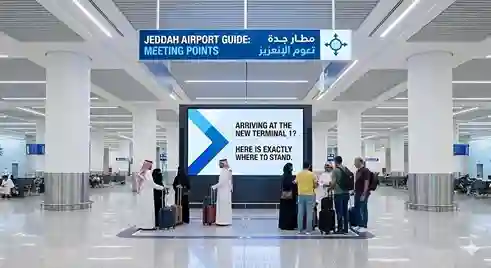
After immigration and baggage claim, the biggest confusion is usually the meeting point. Do not rush outside without confirming your terminal exit gate and exact pickup location. Airports can be crowded, and “helpers” may approach passengers with uncertain offers. Stay inside a clearly marked area, connect to Wi-Fi if needed, and verify your driver contact or booking number before moving with your luggage.
If you pre-booked your ride, share your final status only after collecting bags. Send terminal name, gate marker, and a short message that you are ready. This prevents missed pickups and unnecessary calls while you are still in line. Families should keep passports and booking screenshots in one accessible pouch so nobody has to open large suitcases in busy arrival zones.
Related links: Jeddah Airport transfer rates • Wheelchair Accessible • Airport Transfers • Contact Us • Luggage & Taxi Guide
How to avoid hidden costs and travel smoother
The most common budget mistake is accepting an unclear quote. Some passengers hear a low starting fare, then later pay extra for luggage, waiting, terminal parking, or “night surcharge.” Ask one direct question before entering any vehicle: “Is this total final price from this terminal to my exact hotel?” If the answer is vague, walk away and use your confirmed booking channel.
Another easy win is matching the vehicle to your luggage reality. Two families with strollers and large suitcases should not force a small car. A crowded vehicle leads to uncomfortable travel and extra stops. Booking the right size once is cheaper than paying for a second taxi later. A calm, direct, and documented transfer protects your budget and your energy for Umrah rituals.
Related links: Luggage & Taxi Guide
Compare route cost, timing, and vehicle fit before confirming
A smart Umrah transfer decision is rarely about the headline price alone. Always compare total journey cost, how long you may wait, how much luggage you carry, and whether any elderly passengers need easy entry and exit. A slightly higher fare can save you from split taxis, missed prayer windows, or exhausting transfers between terminals and hotels.
When pilgrims review pricing early, they usually avoid last-minute panic. Keep one simple shortlist: budget option, family comfort option, and premium option. Then lock the plan that matches your real group size and arrival time. This simple comparison method prevents overpaying while keeping your transfer reliable and physically comfortable for everyone traveling with you.
Related links: VIP Luxury Transport • Group Transport • Wheelchair Accessible • Luggage & Taxi Guide • Transport for the Elderly
Confirm your ride details in writing to avoid surprises
Before travel day, keep a written confirmation that includes pickup point, destination hotel, date, number of passengers, luggage count, and agreed fare. Written confirmation protects both sides and eliminates misunderstandings at crowded airport exits or hotel lobbies. If your flight changes, send the updated arrival details immediately so your pickup plan remains clear.
Also save a backup communication path. Keep the booking contact, your hotel phone number, and at least one family member aware of the transfer details. If anything changes on the road, clear communication prevents confusion. This habit is especially important for first-time pilgrims, elderly travelers, and families arriving with children after long international flights.
Related links: Wheelchair Accessible • Airport Transfers • Contact Us • Luggage & Taxi Guide • Transport for the Elderly
Family handover checklist from airport pickup to hotel drop
Large Umrah groups should assign simple roles before travel day: one person keeps travel documents, one manages communication with the driver, and one tracks children or elderly support needs. This prevents chaos in crowded terminals where everyone is tired and receiving messages at once. When each person has a clear role, boarding is faster, loading is safer, and costly delays are avoided.
At hotel arrival, confirm the drop point clearly instead of stopping randomly in a busy street. Verify the exact hotel entrance, unload luggage in one controlled sequence, and keep valuables with one responsible family member. These practical handover habits reduce lost items, confusion, and unnecessary physical strain after long journeys—especially important when the group includes seniors or very young children.
Related links: Group Transport • Wheelchair Accessible • Airport Transfers • Luggage & Taxi Guide • Transport for the Elderly
Protect your worship energy by planning transport around recovery
Pilgrims often underestimate the fatigue created by flights, immigration queues, and heavy luggage movement. Even when transfers are short, poor timing can reduce your physical and mental focus for prayers and Umrah rituals. Build a recovery-first travel plan: hydrate before departure, allow realistic transition time, and avoid stacking too many movements in a single day without rest.
If you are traveling between cities, protect at least one buffer window for rest, meals, and family regrouping before major worship commitments. Smart transport planning is part of ibadah preparation because it helps you arrive calm and present. A reliable ride, predictable timing, and manageable physical effort directly improve the quality of your spiritual experience during the journey.
Related links: Luggage & Taxi Guide
Operational checklist that prevents most transfer problems
Twenty-four hours before any major transfer, reconfirm six items: pickup date, pickup time, exact location pin, passenger count, luggage count, and destination spelling. This small checklist catches most avoidable mistakes before they become expensive same-day emergencies. It is especially useful for multi-city Umrah plans where one late or incorrect transfer can disturb hotel check-ins and worship schedules.
On travel day, keep your phone charged, international roaming or local data active, and key addresses saved offline. If internet drops in transit, you still keep control of route details. Practical readiness is not about fear; it is about smooth execution. Pilgrims who follow this checklist usually report calmer journeys, faster handovers, and fewer last-minute conflicts at pickup or drop-off points.
Related links: Luggage & Taxi Guide
Vehicle-fit framework pilgrims can use in 2 minutes
Families often over-focus on one fare figure and under-focus on real vehicle fit. A Sedan or Toyota Camry can be perfectly fine for light luggage and short city movement, but it quickly becomes uncomfortable for multi-bag family arrivals. The practical approach is simple: choose by people, bags, and physical comfort first, then compare prices. This prevents costly second rides and keeps everyone calmer after long flights.
When planning for elderly passengers, Hyundai Staria and GMC Yukon options are usually preferred because entry and cabin comfort are easier for longer rides. For larger groups or heavy luggage, Toyota Hiace and Toyota Coaster choices reduce boarding stress and loading conflicts. Vehicle fit is not luxury planning; it is an operational decision that protects energy and reduces avoidable arguments at pickup points.
Before departure day, list passenger count, largest bag dimensions, stroller or wheelchair details, and route duration. Then match that checklist to one confirmed vehicle class. Pilgrims who do this rarely face last-minute upgrades, forced luggage reshuffles, or delay penalties. A correct first match often saves money in real terms because the trip remains direct, predictable, and physically manageable for everyone.
Related links: GMC Yukon details • Hyundai Staria details • Toyota Hiace details • Toyota Coaster details • Sedan options • VIP Luxury Transport • Wheelchair Accessible • Luggage & Taxi Guide • Transport for the Elderly • Book Toyota Coaster • Book Toyota Hiace
Scheduling transfers around worship windows and city flow
Transport quality is not only about the car; it is about timing against city movement. Jeddah Airport arrivals, hotel check-in bottlenecks, and prayer-time congestion can turn a short transfer into an exhausting process if departure windows are poorly chosen. Build your plan with realistic buffers so your family is not rushing passports, luggage, and hotel coordination under pressure.
This is even more important for intercity movement such as Makkah to Madinah, where route duration plus breaks must align with prayer and rest needs. A well-timed departure protects your day in Madinah and prevents late check-in complications. If you also plan Ziyarat stops, avoid overloading the same day; split heavy movement and site visits so worship focus stays strong instead of becoming logistics-heavy.
Pilgrims who sequence airport transfer, intercity travel, and Ziyarat activity with clear rest windows usually report better spiritual focus and fewer family tensions. Smart transport timing is part of ibadah readiness because it preserves energy, patience, and concentration. Reliable planning reduces mental load and keeps your journey aligned with spiritual priorities rather than constant travel firefighting.
Related links: Jeddah Airport transfer rates • Makkah to Madinah rates • Ziyarat rates • Airport Transfers • Makkah Ziyarat • Luggage & Taxi Guide
Booking discipline that keeps the journey transparent
Good transport outcomes usually come from clear written confirmations. Always Book with complete details: route, date, terminal or hotel pickup point, passenger count, luggage count, and final SAR fare. Written clarity protects both sides and prevents common disputes around waiting time, route assumptions, or vehicle mismatch in high-traffic conditions.
Use WhatsApp updates only for operational changes such as flight delays, gate updates, or revised pickup timing. Keep all critical details in one thread so family coordinators can reference them quickly. This communication habit is especially valuable when travelers are tired, roaming data is unstable, or multiple relatives are forwarding different instructions at once.
If the plan changes, reconfirm once with a single final summary before travel begins. That one summary should include pickup point, destination, fare, and contact name. Pilgrims who follow this discipline make fewer mistakes, board faster, and arrive with less stress. Clear communication is a practical form of risk management, not an administrative burden.
Related links: Book your ride • Contact Us • Luggage & Taxi Guide
Arrival-day execution checklist for stress-free transfers
The first three hours after landing are where most transport mistakes happen. Families are tired, phone batteries are low, and luggage handling slows decisions. At Jeddah Airport or Madinah Airport, assign one coordinator who keeps all booking screenshots, hotel details, and contact numbers in one place. One clear coordinator prevents duplicated calls, conflicting instructions, and confusion at crowded pickup lanes.
Before entering any vehicle, confirm four non-negotiables out loud: destination name, final fare in SAR, vehicle class, and estimated route time. This 60-second verification removes most hidden-fee disputes. If your plan includes an intercity move like Makkah to Madinah, repeat the same protocol after every major stop so details stay accurate throughout the day. Consistency is what protects both budget and schedule reliability.
Families combining city movement with Ziyarat visits should avoid stacking too many segments on arrival day. Travel fatigue and dense traffic often reduce patience, especially for children and elderly pilgrims. A better strategy is to complete core transfer first, rest properly, then run Ziyarat with a fresh team and a confirmed route plan. Better sequencing preserves energy and keeps the spiritual goal at the center of the journey.
Finally, lock one communication channel for all updates. Send operational changes through WhatsApp, and keep a final written summary before departure that includes pickup point, drop point, and vehicle details. This discipline helps every traveler in the group stay informed without guesswork. When communication is clear and repeated once in writing, transfer day becomes calmer, faster, and significantly safer for everyone involved.
Related links: Jeddah Airport transfer rates • Makkah to Madinah rates • Ziyarat rates • Book your ride • Group Transport • Wheelchair Accessible • Airport Transfers • Makkah Ziyarat • Contact Us • Luggage & Taxi Guide • Transport for the Elderly
Price table for Jeddah Airport to Makkah transfers
Jeddah Airport to Makkah Hotel is 90 km and usually takes 1 hr 15 min. This is the core transfer most first-time pilgrims compare, so using fixed vehicle rates removes confusion immediately. Using known route data early helps pilgrims align transfer windows with check-in timing, prayer plans, and rest needs without risky assumptions.
Current fixed fares on this route are 250 SAR for a Sedan, 300 SAR for a Hyundai Staria, 500 SAR for a GMC Yukon, 350 SAR for a Toyota Hiace, and 600 SAR for a Toyota Coaster. Always compare fare with luggage fit and passenger comfort so your final choice delivers true value instead of just a lower headline number.
- Reference route: Jeddah Airport to Makkah Hotel (90 km, 1 hr 15 min).
- Confirm fixed fare in writing before travel day and keep one final summary.
- Choose the vehicle class by people plus luggage, not seat count only.
Distance: 90 km • Typical duration: 1 hr 15 min
| Vehicle | Fixed fare |
|---|---|
| Sedan / Toyota Camry | 250 SAR |
| Hyundai Staria | 300 SAR |
| GMC Yukon | 500 SAR |
| Toyota Hiace | 350 SAR |
| Toyota Coaster | 600 SAR |
Related links: Jeddah Airport transfer rates • GMC Yukon details • Hyundai Staria details • Toyota Hiace details • Toyota Coaster details • Sedan options • Airport Transfers • Luggage & Taxi Guide • Book Toyota Coaster • Book Toyota Hiace
Frequently Asked Questions
Below are practical answers pilgrims usually ask before confirming transport. These answers follow current route data, fixed fare ranges, and real transfer planning constraints so families can make clear decisions quickly.
What is the cheapest way to get from Jeddah Airport to Makkah?▼
For Jeddah Airport to Makkah Hotel, the route reference is 90 km with a typical duration of 1 hr 15 min. Exact timing still depends on traffic windows, prayer-time congestion, and stop requirements, so keep a buffer for family comfort.
What are the fixed fares in SAR for each vehicle class?▼
250 SAR for Sedan, 300 SAR for Hyundai Staria, 500 SAR for GMC Yukon, 350 SAR for Toyota Hiace, and 600 SAR for Toyota Coaster. Confirm the final class and fare in writing before pickup.
Which vehicle works best for families with multiple bags?▼
Sedan fits light luggage only. Hyundai Staria and GMC Yukon are popular for comfort-focused family transfers. Toyota Hiace and Toyota Coaster are generally better for larger groups or heavier baggage because loading remains safer and less stressful.
How early should I Book transfers during high-demand periods?▼
Book key rides at least 24–48 hours early, and earlier for Ramadan peaks. Early confirmation protects availability, improves vehicle matching, and reduces last-minute pricing surprises on airport and intercity routes.
Can I confirm transfer details through WhatsApp?▼
Yes. Share route, passenger count, and luggage details for written confirmation. WhatsApp contact: +966 54 516 3469. Direct link: https://wa.me/966545163469?text=Hello%2C+I+want+to+book+an+Umrah+taxi.
Related links: Jeddah Airport transfer rates • GMC Yukon details • Hyundai Staria details • Toyota Hiace details • Toyota Coaster details • Sedan options • Book your ride • Airport Transfers • Contact Us • Ramadan Taxi Prices • Luggage & Taxi Guide • Book Toyota Coaster • Book Toyota Hiace
For most pilgrims, the best “cheap” method from Jeddah Airport to Makkah is the one that stays predictable from door to door. Decide using total cost, comfort, and reliability together. When your airport exit is clear and your transfer is confirmed, you arrive focused, rested, and ready for worship instead of stressed by transport problems.
To lock your transfer with clear route details, message us on WhatsApp at +966 54 516 3469. Our team can help confirm route timing, luggage fit, and the right vehicle class before departure so your family arrives calm and fully prepared: Chat on WhatsApp to Book
Plan Your Journey
Ready for a smooth Umrah transfer?
Share your route, passenger count, and travel date. We will help you choose the right vehicle with clear fixed pricing.